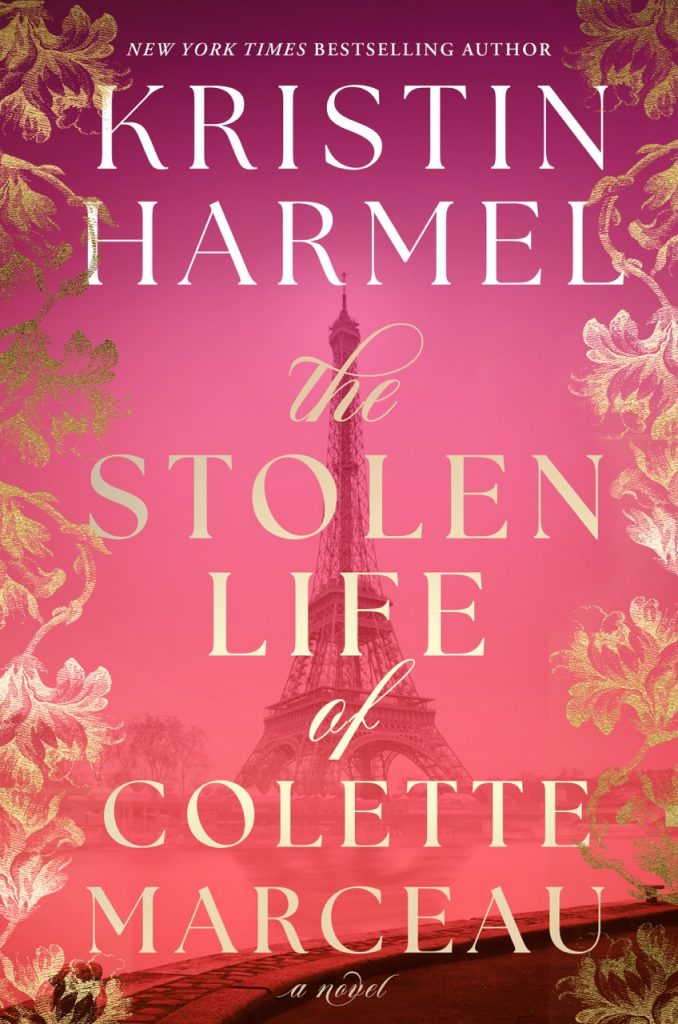
Kristin Harmel’s Instant New York Times Bestseller takes readers from the glittering jewel ateliers of pre-war Paris to the shadows of Nazi occupation — and finally to present-day Boston. If the novel left you longing to walk the streets where Colette and her mother Annabel risked everything, here is your guide.
Paris: Where It All Began
Place Vendôme — The Heart of Parisian Jewelry
The novel opens in 1927 with master jeweler Max Besner crafting a magnificent two-piece diamond bracelet for the Rosman family — a piece that will define the fates of multiple families across decades. The world of Parisian high jewelry that Harmel evokes is inseparable from Place Vendôme, the grand octagonal square in the 1st arrondissement that has been the center of fine jewelry in Paris for over a century. Cartier, Van Cleef & Arpels, Chaumet, and Boucheron all line the square — the same ateliers that would have been the backdrop to Colette and Annabel’s world of theft and resistance.
Visit today: Place Vendôme, Paris — stroll the colonnaded arcades, peer into the jewelry houses, and imagine Annabel casing her next target.
The Seine — Where Tragedy Floats to the Surface
One of the novel’s most haunting moments comes when Liliane’s body is discovered floating in the Seine. The river runs through the heart of Paris and serves as both a literal and symbolic boundary throughout the story — between the Paris of before and the Paris of occupation, between hope and loss.
Visit today: Walk the Quais de Seine, particularly between the Île de la Cité and the Left Bank. The UNESCO-listed riverbanks are largely unchanged in character since the 1940s.
Le Marais — The Jewish Quarter
The story’s origins are rooted in Paris’s Jewish community. The diamond merchant Salomon Rosman and his family are part of the tight-knit Jewish world that thrived in Paris before the war — and was devastated by it. Le Marais, the historic Jewish quarter of Paris centered around the Rue des Rosiers in the 4th arrondissement, is where that community lived, worked, and worshipped.
Visit today:
- Mémorial de la Shoah — the Holocaust memorial and museum on Allée des Justes, with an extraordinary permanent collection documenting the deportation of French Jews
- Rue des Rosiers — the historic heart of Jewish Paris, still lined with delis and bakeries
Vélodrome d’Hiver (Vel’ d’Hiv) — The Roundup Site
Harmel specifically references the Vélodrome d’Hiver — the indoor cycling stadium near the Eiffel Tower — as a site of horror. In July 1942 (the very year the novel’s tragedy unfolds), more than 13,000 Jewish men, women, and children were rounded up by French police and held at the Vel’ d’Hiv in catastrophic conditions before deportation to Nazi death camps. The stadium itself was demolished in 1959, but a memorial now marks the site.
Visit today: Mémorial des Martyrs de la Déportation on Île de la Cité, and the Vel’ d’Hiv Memorial at 8 Boulevard de Grenelle.
Prison du Cherche-Midi — Annabel’s Fate
In one of the novel’s most affecting scenes, prisoners at Cherche-Midi — a military prison in the 6th arrondissement used by the Nazis during the occupation — sing “La Marseillaise” and chant “Notre France vivra” (Our France will live) each evening, even as they await execution. Harmel notes these details are drawn from real historical accounts. Annabel is arrested and ultimately executed — her fate emblematic of the hundreds of Resistance members who passed through Cherche-Midi’s walls.
Visit today: The prison no longer stands, but the Musée de l’Ordre de la Libération at Hôtel national des Invalides documents the French Resistance in extraordinary depth.
Musée de l’Armée / Resistance Paris
For readers who want to fully immerse themselves in the world Colette and Annabel inhabited — funding the Resistance through theft, moving through occupied streets — Paris has several sites that bring that history to life.
Visit today:
- Musée de la Résistance Nationale in Champigny-sur-Marne — the most comprehensive Resistance museum in France
- Mémorial Leclerc et de la Libération de Paris — inside Montparnasse station, where the Liberation began
Boston: Colette’s Present-Day Life
The Holocaust Education Center
In 2018, 89-year-old Colette volunteers at a Holocaust education center in Boston — which she has secretly funded for decades with proceeds from her thefts. While the center in the novel is fictional, Boston has a real institution that mirrors its purpose exactly.
Visit today: The New England Holocaust Memorial on Carmen Park near Faneuil Hall — six luminous glass towers etched with numbers evoking the six million victims. Powerful and unmissable.
Boston Museum Scene — Where the Bracelet Reappears
The novel’s present-day plot is set in motion when the long-missing diamond bracelet surfaces in a Boston museum exhibit. The Museum of Fine Arts Boston is the city’s anchor institution for European decorative arts and jewelry exhibitions.
Visit today: Museum of Fine Arts Boston — 465 Huntington Avenue, Boston. The MFA’s decorative arts collection includes significant European jewelry holdings.
A Note on the History Behind the Fiction
Harmel has made a career of finding real, documented history and building fictional families into it. The roundups, the Resistance networks, the prison at Cherche-Midi, the Vel’ d’Hiv — all of it happened. What she invented was Colette, Annabel, and the bracelet. Everything they moved through was real.
If the novel moved you, the locations above will too.
The Stolen Life of Colette Marceau by Kristin Harmel (Gallery Books, 2025) is available at Amazon, Barnes & Noble, IndieBound, and Simon & Schuster.